Commercial Kitchen Electrical Fit-Out, Manchester
An airline catering client in Manchester asked us to handle the full electrical fit-out for a new commercial kitchen, built from an empty shell. The brief covered everything from the incoming three-phase distribution board through to individually fused circuits for ovens, dishwashers, chillers, freezers and a blast chiller, plus the containment, lighting and safety systems needed to get a working catering kitchen through to certification.
The brief
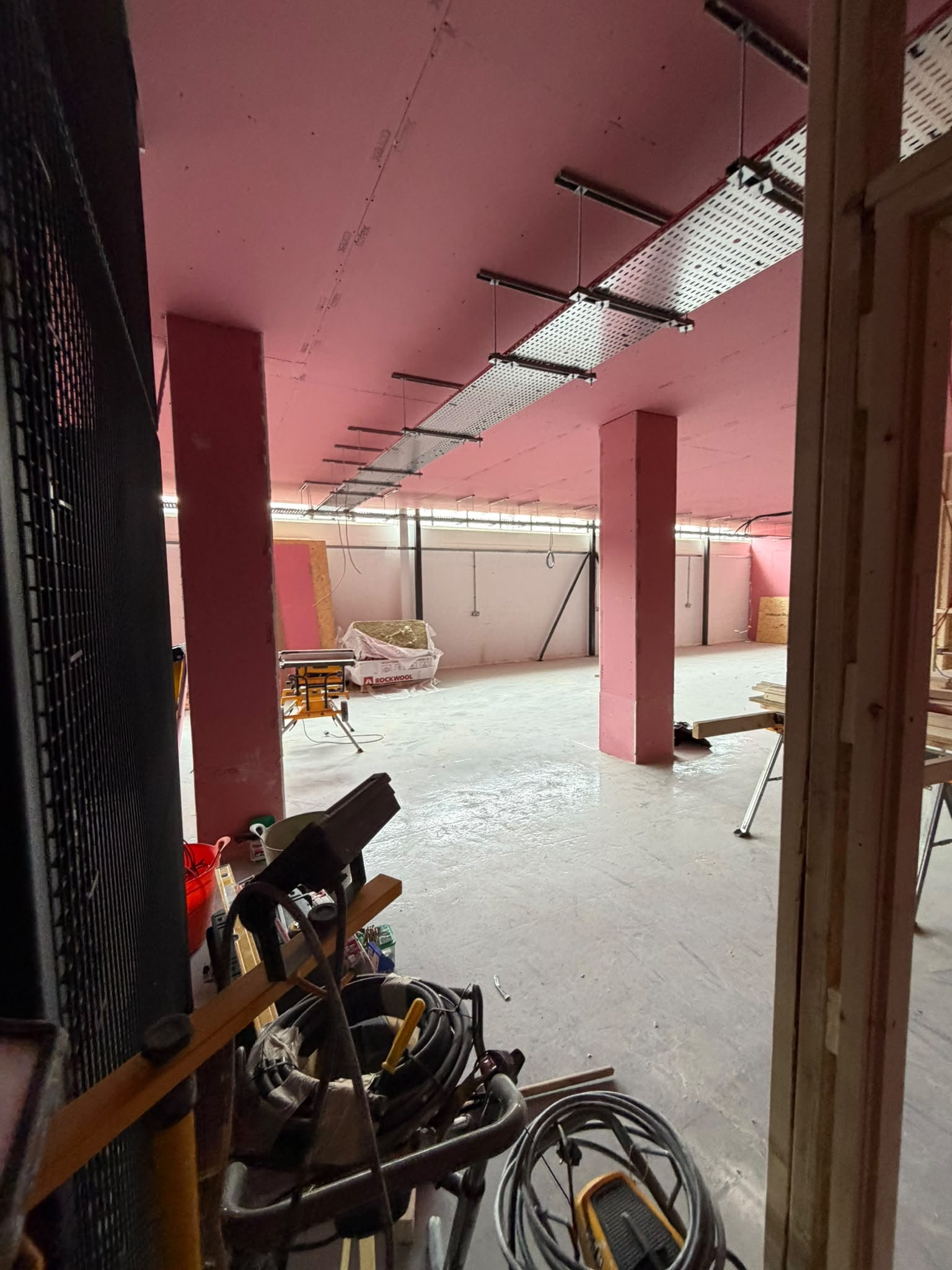
The unit was handed over as a bare shell: insulated fire-rated wall and ceiling panels up, but no electrical containment, distribution, or equipment circuits in place. The kitchen needed to support a full commercial catering operation producing meals at volume for an airline client, which meant a three-phase supply capable of running multiple ovens, jet wash units, dishwashers, macerators, and a bank of chillers, freezers and a blast chiller simultaneously, without circuits interfering with each other. Every piece of catering equipment needed its own dedicated, correctly rated circuit, and the kitchen extraction canopy needed a gas interlock system tied into the gas supply for safety compliance.
First fix: containment and distribution
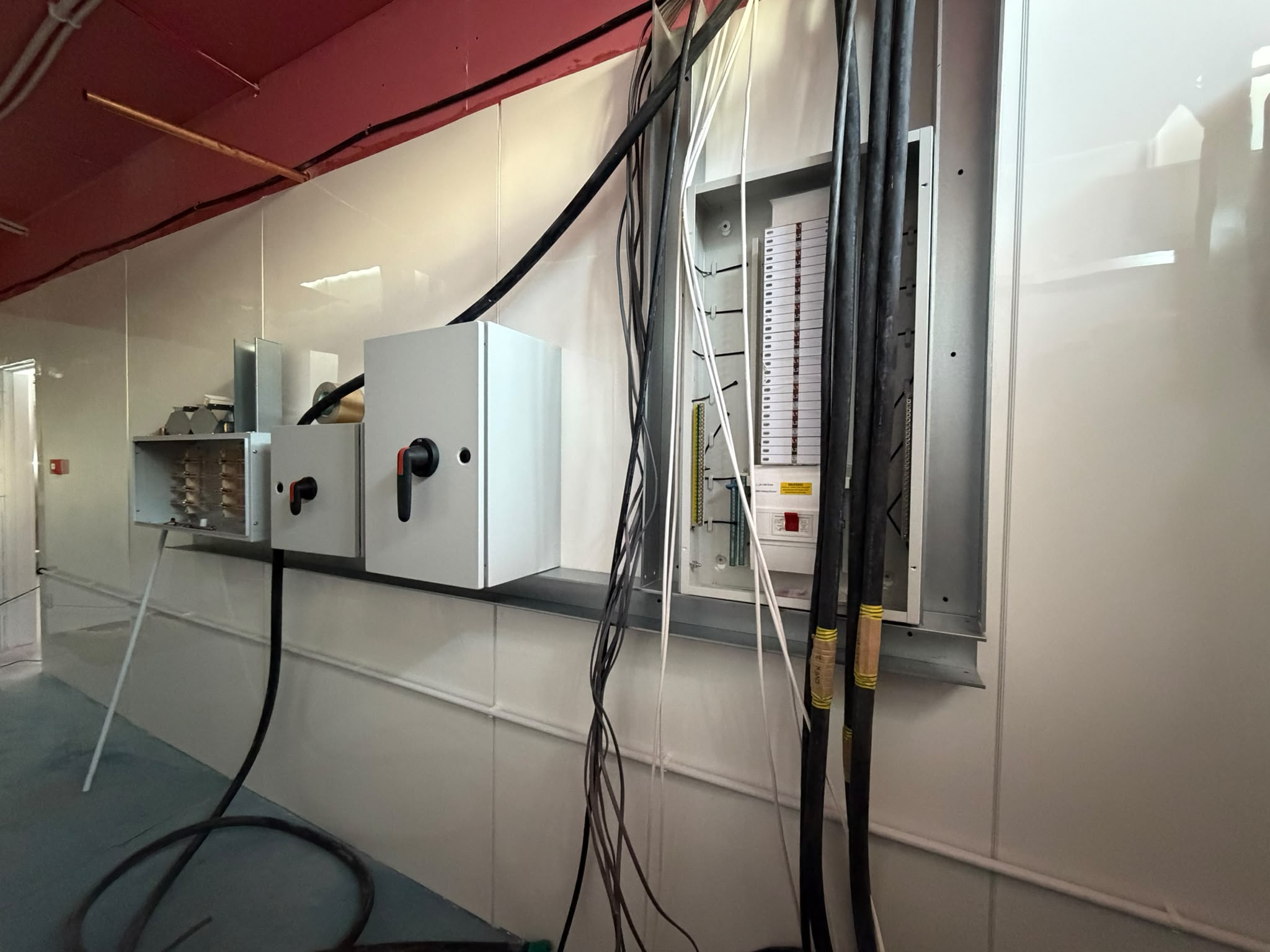
We started with the containment first fix, running cable basket tray through the ceiling void above the fire-rated panel ceiling to carry supplies out to every piece of equipment and every socket and lighting circuit in the kitchen. A new three-phase distribution board was mounted and first-fixed at this stage, along with a bank of isolators and switch disconnectors positioned outside the board itself for equipment that needed local isolation for maintenance and cleaning, standard practice in a commercial kitchen environment.
With the shell still open, this was the point to get containment routes right. Every run was planned to keep equipment circuits separated from lighting and general power, and to leave enough spare capacity in the tray for future equipment changes without needing to open the ceiling again.
Second fix: the distribution board and circuits
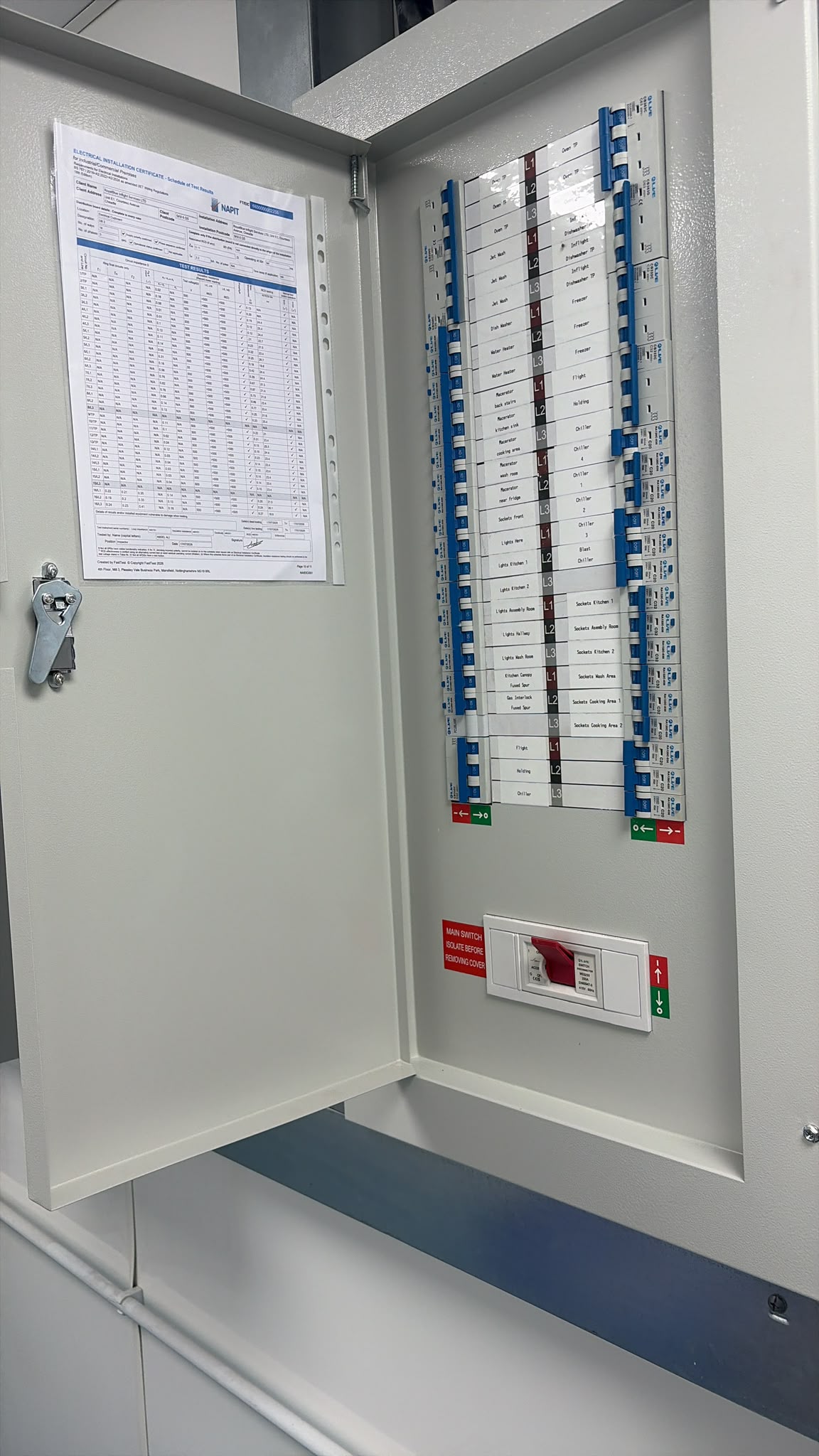
The distribution board was built out as a three-phase board with each phase balanced across the major loads. Ovens, dishwashers and jet wash units were each wired on their own triple-pole circuits given the current they draw. Macerators were run as individual circuits to each waste point, back stairs, kitchen sink, cooking area, wash room and near the fridge bank, so a blockage or fault at one point doesn't take out drainage elsewhere in the kitchen.
Cold storage was treated as its own priority: four chillers, two freezers and a blast chiller were each given dedicated circuits, since any of them tripping needs to be immediately obvious and isolated to a single unit rather than risking multiple units losing power and putting stock at risk. Lighting was split by area, kitchen, hallway, wash room and assembly room, each on its own circuit, and sockets were similarly zoned by function, cooking area, wash area, and the assembly room.
The kitchen extraction canopy was wired through a gas interlock system, so the gas supply to the cooking equipment is automatically isolated if the extraction fan isn't running, a standard safety requirement for any commercial kitchen using gas appliances.
Testing and certification
With the full installation in place, every circuit was tested individually and the results recorded on a full schedule of test results: insulation resistance, earth loop impedance, RCD trip times and load balancing across all three phases. The completed installation was issued with a NAPIT Electrical Installation Certificate, giving the client full documentation for their insurers and for any future food safety or compliance inspections.
The outcome
The kitchen went from an empty shell to a fully certified, operational commercial catering facility, with every piece of equipment on its own dedicated circuit and full documentation to back it up. For a catering operation supplying an airline client, having chillers, freezers and cooking equipment properly isolated from each other isn't just good practice, it protects the cold chain and keeps production running if one circuit does need attention.
Get in Touch
Request a quote or ask us anything. We typically respond within a few hours.
Service Area
London & surrounding areas