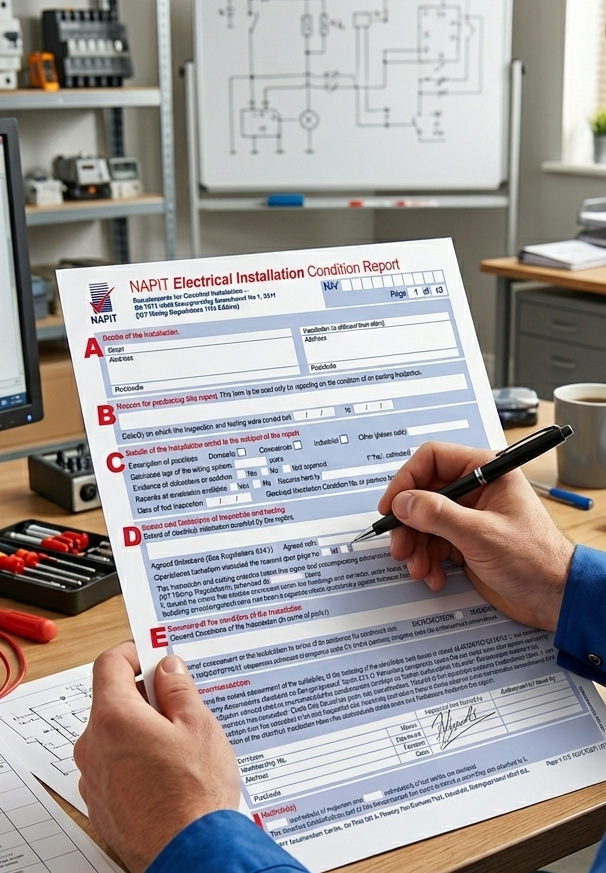
EICR Cost for Landlords in Ealing: 2026 Guide
If you let a property in Ealing, you need a valid Electrical Installation Condition Report, or EICR, and you need a new one at least every five years. Ealing has a lot of converted Victorian and Edwardian houses, mansion block flats and 1930s semis that have been split into lets, and the age of the wiring is the main thing that decides how an inspection goes. This guide covers what the law requires, what an EICR costs in 2026, and what happens if the report comes back unsatisfactory.
What the law requires
Under the Electrical Safety Standards in the Private Rented Sector (England) Regulations 2020, landlords must have the electrical installation inspected and tested by a qualified person at least every five years, or sooner if the previous report says so. You must give a copy of the report to existing tenants within 28 days of the inspection, to new tenants before they move in, and to the local council within 7 days if they ask for it.
If the report finds problems that need fixing, you have 28 days, or less if the report specifies it, to complete the remedial work and get written confirmation. Councils can issue penalties of up to £30,000 for breaches, so this is not something to leave until a tenant raises it.
What an EICR involves
The electrician inspects the consumer unit, wiring, sockets, switches, lighting and earthing and bonding, and runs tests on every circuit, including insulation resistance, earth fault loop impedance and RCD trip times. For a typical flat this takes a few hours, and for a larger house it can take most of a day. The power is switched off in sections during testing, so we agree a time with you or the tenant first.
Each issue is given a code. C1 means danger is present and needs immediate action. C2 means potentially dangerous. C3 means improvement is recommended. FI means further investigation is needed. A report is classed as unsatisfactory if it contains any C1, C2 or FI codes, and that is what triggers the 28 day remedial window.
Typical EICR costs in Ealing in 2026
Prices depend mainly on the number of circuits and the size of the property. As a rough guide, a one-bedroom flat typically costs £150 to £220, a two or three-bedroom house or flat £200 to £350, and larger houses or HMOs £350 and upwards. Properties with more than one consumer unit, or where access to circuits is difficult, cost more.
Those prices cover the inspection, testing and report only. Any remedial work is quoted separately once we know what the report finds. Common jobs in Ealing's older housing stock include replacing an old plastic or fuse-wire consumer unit, fitting RCD protection, correcting earth bonding to gas and water, and replacing damaged accessories. Where possible we complete minor fixes on the day so the report can be updated quickly.
Why older Ealing properties often fail first time
The most common reasons we see are consumer units without RCD protection, old rewireable fuse boards, missing or undersized earth bonding, and damaged or non-compliant sockets and light fittings added over the years by previous owners or tenants. None of these are unusual in a Victorian conversion, and most can be fixed without a rewire. A good report tells you exactly what is needed and nothing more.
Book an EICR for your Ealing property
We carry out EICRs for landlords and letting agents across Ealing, Acton, Hanwell, Southall and the wider west London area. Reports are issued promptly, any remedial work is quoted clearly, and we are NAPIT-approved. Get in touch for a quote based on your property.
Frequently asked questions
How often do landlords need an EICR?
At least every five years, or sooner if the previous report recommends a shorter interval. You also need a fresh report before a new tenancy if the existing one is out of date.
How long does an EICR take?
A flat usually takes two to four hours. A larger house can take most of a day. Power is switched off in sections during testing.
What happens if my EICR is unsatisfactory?
You must carry out the remedial work within 28 days, or sooner if the report says so, and get written confirmation that it is done. A copy goes to your tenants and, if asked, to the council.
Does the electrician have to be registered?
The regulations require a competent person. Using a NAPIT or NICEIC registered electrician is the simplest way to show that, and councils expect it.
Get in Touch
Request a quote or ask us anything. We typically respond within a few hours.
Service Area
London & surrounding areas